
Choosing your next number set through mathematics ensures a balance between long-term distribution and probability. Although there is no change in future probabilities based on past drawings, knowing how they are distributed is useful in choosing numbers (in such a way that they are evenly spread visually) for maximum return and minimum sharing.
Selecting your next number set demands the connection between distribution and probability. It is true that every number set drawn is mathematically independent, meaning that past occurrences have no impact on future probabilities. Nevertheless, through understanding the mathematical concepts of distribution and variance, players can objectively form their numbers rather than randomly doing it.
Whereas in choosing numbers on international sites, one needs to know about mathematical models such as combinatorics (nCr). Cultural preferences of numbers are heavily weighted towards lower numbers because of the birthday problem, resulting in uneven sharing of the prizes. The knowledge of probability distributions is what allows you to choose Lucky Numbers (เลขเด็ด) wisely, without biases, while being entirely mathematically sound.
Mathematical Foundation of Combinatorics
The mathematical field of combinatorics demonstrates the formula for determining the number of potential results when the numbers are placed on the grid. With this formula, nCr=n!r!(n-r)!, a system of picking 6 out of 49 numbers will give 13,983,816 combinations. All combinations have equal chances of winning, with the probability of 113,983,816 in an unbiased system.
Probability is the possibility of the occurrence of something. Frequency shows how many times a digit came up before. Mixing these two ideas can cause the “gambler’s fallacy.” This is when people think a number that has not shown up often will be picked soon.
Probability (P) = 1 / Total Combinations (nCr)
Frequency Analysis vs Random Distribution
The frequency distribution analysis measures the number of occurrences of each digit in a large sample size. In a random draw, the digits will be distributed uniformly after several thousand draws. Any clusters formed temporarily are natural and just part of the nature of the digits. There is no problem or bias at all.
| Analysis Type | Core Measure | Main Use | Working Limits |
| Number Pattern Check | Past Draw Total | Shows recent changes | Can’t say what comes next |
| Combinatorial Odds | Total Outcome Space (nCr) | Finds exact odds | Does not look at past results |
| Expected Value (EV) | Money you may get for what you spend | Shows how good money use is | Needs jackpot and ticket numbers |
Picking numbers based on how often they come up in the past gives some shape that you can see, but it does not change the mathematical chance of what numbers will come next.
Cold Digits and Combinatorial Balance
The players usually pay attention to those numbers that frequently appear (“hot” digits) and those numbers that appear rarely (“cold” digits). However, using the mathematics of probability, one can note that, according to the law of large numbers, the previous draws do not influence future draws. Thus, a digit that appeared three times will have an equal chance to appear once again.
The optimal combination composition will depend on the visual analysis and the balance between the numbers:
- Odd/Even Ratio: Maintaining a certain ratio of odd and even numbers, such as 3:3 or,, 4:2 is similar to over $65\%$ of previous draws.
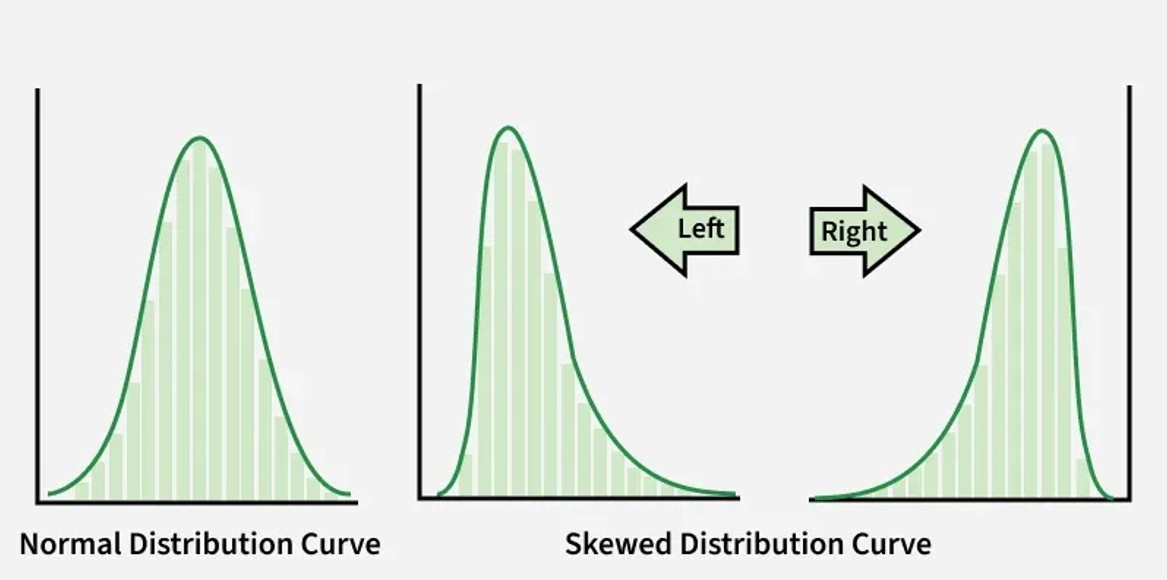
- Sum Range Distribution: The maintenance of the middle range of the sum of selected digits is consistent with the normal pattern of the Gaussian curve distribution.
- High/Low Split: To pick selections across both the top and bottom of the grid helps stop choices from being too close together.
Expected Value in International Draw Matrices
The Expected Value (EV) represents the average returns that you can expect for every ticket purchased. It is determined by considering the size of the prize money, the cost of a ticket, and the probability of winning. It takes into account the prize pool, how much a ticket costs, and your chance to win. When you look at regional draw formats like International Lottery (หวยต่างประเทศ) choices, you will see that their sizes change, and this affects how much a ticket is worth.
EV=(ProbabilityofWinningPrizePool)-TicketCost
When jackpot amounts go up a lot, it may be possible for EV to be more than zero. But there are other risks. For example, if several winners pick the same numbers, they have to share the money. This makes what you really get much less.
FAQs
How is probability different from frequency in number selections?
Probability gives the fixed mathematical probability of occurrence of a combination prior to any draw, while frequency tells the occurrence of a certain number in the past draws.
Can the information of the past draws help to predict future winners?
Not at all since independent random drawings have no memory structure whatsoever. The frequencies in past draws only give statistical data on the events in the past but do not influence future random probabilities in any way.
What is the optimal odd/even number split?
A combination which is split into an equal odd/even ratio (like 3 odd/3 even or 4 odd/2 even in 6 n-digit matrices) comprises more than $65\%$ of total historical winning combinations.
Why do consecutive number sequences rarely win?
Consecutive sequences have the same chance of happening as any other group. But there are not many consecutive sets to be found out of all the possible sets compared to non-consecutive ones.
Does buying multiple tickets linearly increase winning probability?
Yes, buying more different tickets will make the chance go up in a straight way. For example, if you buy ten different tickets, you get ten chances out of the total number of tickets. Still, the chance to win is very small.
Strategic Selection Framework
Choosing combinations using how often numbers show up, chance, and numbers makes what seems random feel more ordered. Picking your number strategy with real math—like seeing how to balance sets, figuring out what pay you might get, and checking if odd and even numbers are mixed—helps you not pick based only on gut feeling. Remember, each draw is its own. This helps set what you can expect, and you can aim for bigger wins when prizes get split. Using clear ways from numbers gives all players a simple way to pick numbers, even when there are lots of different options. This helps you feel sure of each step.